
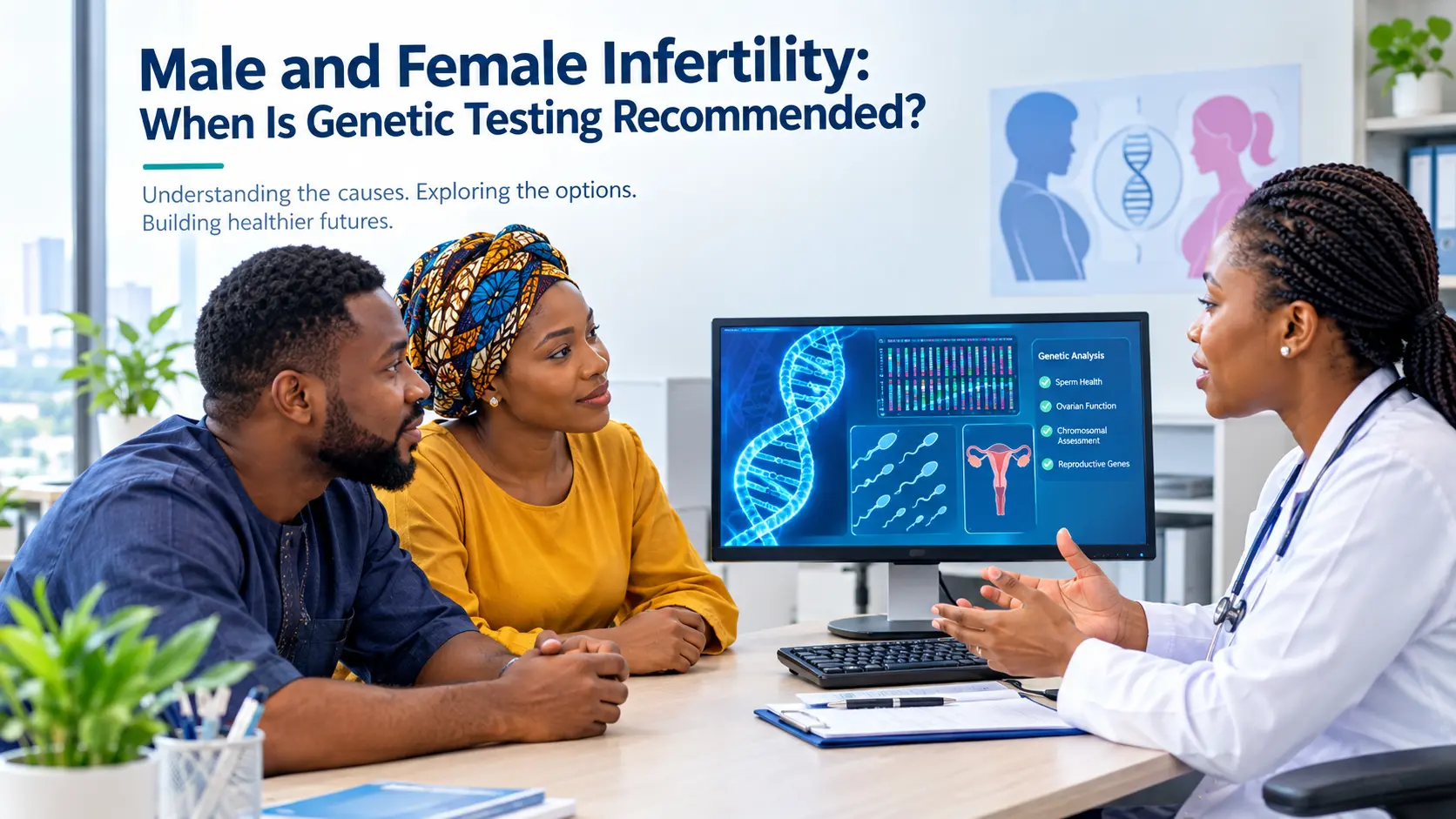
Infertility in Nigeria: Understanding the Causes and the Role of Genetic Testing:
Infertility can be an emotionally and physically challenging experience for couples. In Nigeria, conversations about infertility are often accompanied by social pressure, misconceptions and, in some cases, the assumption that the woman is responsible when a pregnancy does not occur.
However, infertility can affect men and women, and sometimes both partners contribute to the difficulty in conceiving. Nigerian studies have reported significant male-factor contributions among couples seeking infertility care.
As fertility investigations become more advanced, genetic testing may provide additional information for selected individuals and couples, particularly when severe male-factor infertility, unexplained infertility or a suspected inherited reproductive condition is present.
What Is Infertility?
The World Health Organization defines infertility as the inability to achieve pregnancy after 12 months or more of regular unprotected sexual intercourse. Infertility may result from male factors, female factors, a combination of both, or causes that remain unexplained.
Infertility should therefore be approached as a couple’s health issue rather than solely a woman’s problem.
For Nigerian couples experiencing difficulty conceiving, appropriate evaluation can help identify potentially treatable causes and determine whether additional investigations, including genetic testing, may be useful.
How Common Is Infertility in Nigeria?
The exact prevalence varies between studies, populations and clinical settings. Nigerian hospital-based studies have reported substantial numbers of couples seeking care for infertility.
For example, a study of couples evaluated in southeastern Nigeria found male factors alone in 42.4% of couples, female factors alone in 25.8%, combined male and female factors in 20.7%, and unexplained infertility in 11.1%.More recent Nigerian research also continues to highlight the importance of male-factor infertility.Infertility evaluation should involve both partners.
Infertility causes in Nigerian Couples:
There is no single cause of infertility. Different couples may have very different medical circumstances.
Female factors may include:
- Ovulation disorders
- Polycystic ovary syndrome (PCOS)
- Blocked or damaged fallopian tubes
- Endometriosis
- Uterine abnormalities
- Fibroids in some circumstances
- Hormonal disorders
- Age-related decline in fertility
- Previous pelvic infections or surgery
The WHO notes that untreated sexually transmitted infections, complications from unsafe abortion, postpartum infections and pelvic surgery can contribute to tubal infertility.
Male factors may include:
- Low sperm concentration
- Poor sperm motility
- Abnormal sperm morphology
- Azoospermia — absence of sperm in semen
- Varicocele
- Hormonal abnormalities
- Reproductive tract obstruction
- Previous infections
- Certain medications or environmental exposures
- Genetic abnormalities
A Nigerian review has also discussed possible associations between male reproductive problems and exposures including heavy metals, pesticides, industrial chemicals, infections and nutritional factors.
Infertility Is Not Just a Woman’s Problem
This is particularly important to address in a Nigerian-focused article.
In some communities, women may experience significant social pressure or blame when a couple cannot conceive. But scientific evidence shows that male factors can make an important contribution to infertility. Therefore, both partners should be assessed rather than automatically focusing investigations on the woman.
Can Infertility Be Genetic?
Yes, in some cases.
Genes provide instructions that influence reproductive development, hormone pathways, sperm production, ovarian function and other biological processes.
Certain genetic changes can interfere with fertility. Genetic causes are particularly important to consider in some men with azoospermia or severe oligozoospermia.
For example, professional guidelines recommend consideration of karyotyping and Y-chromosome microdeletion testing in appropriately selected men with primary infertility and azoospermia or severe oligozoospermia associated with impaired sperm production.
NGS Infertility Panel:
Next-Generation Sequencing (NGS) is a molecular genetic technology that allows laboratories to analyse multiple genetic regions simultaneously.
An infertility NGS panel can examine a selected group of genes associated with reproductive disorders.
Instead of investigating one gene at a time, panel-based sequencing can allow multiple relevant genes to be assessed within a single testing approach.
When Might Genetic Testing for Infertility Be Considered?
A fertility specialist or healthcare professional may consider genetic testing in situations such as:
1. Severe male-factor infertility
Men with very low sperm counts or azoospermia may require genetic evaluation depending on their clinical findings.
2. Unexplained infertility
When routine investigations do not adequately explain infertility, additional testing may sometimes be considered.
3. Suspected inherited reproductive conditions
A personal or family history suggesting an inherited disorder may support consideration of genetic testing.
4. Recurrent pregnancy loss
In selected couples experiencing recurrent pregnancy loss, genetic evaluation may be part of a broader investigation.
5. Previous genetic abnormalities
If previous testing has identified a chromosomal or genetic abnormality, further genetic counselling and testing may be appropriate.
6. Before certain assisted reproductive procedures
Genetic information can sometimes help clinicians and couples understand reproductive risks and make informed decisions about assisted reproduction.
Genetic Testing for Male Infertility
Male infertility deserves particular attention in Nigeria.
A semen analysis is an important component of the initial evaluation of male fertility. If severe abnormalities are identified, further investigations may be required.
For men with severe oligozoospermia or azoospermia, genetic investigations can sometimes help identify an underlying cause.
Potentially relevant genetic investigations may include:
- Chromosomal analysis/karyotyping
- Y-chromosome microdeletion testing
- CFTR testing in appropriately selected men with congenital absence of the vas deferens or certain forms of obstructive azoospermia
- Broader genetic testing where clinically indicated
Infertility Genetic Testing at DNA Labs Nigeria
For couples or individuals whose healthcare provider suspects a genetic contribution to infertility, DNA Labs Nigeria offers an Infertility Panel – NGS Genetic DNA Test designed to investigate genetic factors associated with infertility.
Frequently Asked Questions:
Is infertility always caused by the woman?
No. Infertility may involve male factors, female factors, both partners, or remain unexplained. Nigerian studies have demonstrated a substantial contribution from male factors.
Can a man’s genes cause infertility?
Yes. Certain chromosomal and genetic abnormalities can impair sperm production or reproductive tract development.
Can an NGS test detect all causes of infertility?
NGS panels investigate specific genes included in the test. Infertility can have many non-genetic causes as well.
Should both partners be tested for infertility?
Both partners should generally undergo appropriate fertility evaluation rather than assuming that only one partner is responsible.
Conclusion
Infertility in Nigeria is a complex reproductive-health issue that can affect men, women or both partners. Nigerian research highlights the important contribution of male-factor infertility, making evaluation of both partners essential. While infections, tubal disease, hormonal disorders, reproductive conditions and lifestyle or environmental factors can contribute to infertility, genetic factors can also play a role in selected cases.